TL;DR
- Pre-1978 buildings in California frequently contain five hidden environmental hazards: asbestos, lead-based paint, mold, PCBs (polychlorinated biphenyls), and contaminated soil.
- These hazards are invisible during normal building use but become dangerous during renovation, demolition, water damage events, or when building materials deteriorate with age.
- California law requires testing before disturbing these materials. Failure to identify and properly handle hazardous materials can result in fines exceeding $70,000, project shutdowns, and serious health consequences.
- A single environmental assessment can identify all five hazards before you begin any renovation or demolition project. CVE Corp provides comprehensive environmental services covering all five risk categories.
Why 1978 Is the Critical Year
The late 1970s marked a turning point in building material safety regulations in the United States. The EPA banned lead-based paint for residential use in 1978. Asbestos use in construction declined sharply after the Clean Air Act amendments and EPA regulations of the 1970s. PCBs were banned from new manufacturing in 1979. Buildings constructed before these regulatory changes were built with materials that are now recognized as serious health hazards — and millions of these buildings are still standing and occupied across California.
If your building was constructed before 1978, there is a statistical likelihood that it contains at least one — and possibly all five — of the hazards described below. The key is knowing what to look for, when these materials become dangerous, and what California law requires when you disturb them.
Hazard #1: Asbestos
Where It Hides
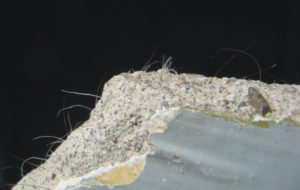
Asbestos was valued for its heat resistance, tensile strength, and insulating properties. In pre-1978 buildings, it is commonly found in floor tiles and mastic adhesive, popcorn (acoustic) ceiling texture, pipe and duct insulation, roofing shingles and felt, cement siding (transite), vermiculite attic insulation, joint compound, and fireproofing spray.
When It Becomes Dangerous
Intact asbestos materials in good condition are generally not an immediate health risk. The danger occurs when these materials are cut, drilled, sanded, broken, or demolished — releasing microscopic fibers that, once inhaled, can cause mesothelioma (a fatal cancer), lung cancer, and asbestosis. There is no safe level of asbestos exposure.
What California Requires
A certified asbestos survey is required before any renovation or demolition of pre-1980 buildings. Abatement must be performed by a DOSH-registered contractor with a Class 22 license. Violations carry fines exceeding $70,000 per occurrence.
Hazard #2: Lead-Based Paint
Where It Hides
Lead-based paint was used on both interior and exterior surfaces in virtually every building constructed before 1978. It is found on walls, ceilings, doors, window frames, trim, railings, porches, and exterior siding. Multiple layers of newer paint may cover it, but the lead paint remains underneath.
When It Becomes Dangerous
Lead paint becomes hazardous when it chips, peels, or deteriorates — or when it is disturbed during renovation. Sanding, scraping, or demolishing painted surfaces releases lead dust that can be inhaled or ingested. Lead is particularly dangerous to children, causing irreversible neurological damage, developmental delays, and behavioral problems at very low exposure levels. In adults, lead exposure causes kidney damage, reproductive problems, and neurological effects.
What California Requires
The EPA’s Renovation, Repair, and Painting (RRP) Rule requires that any contractor working on pre-1978 buildings be EPA-certified and follow lead-safe work practices. California’s Proposition 65 adds additional notification requirements. DTSC classifies lead paint waste as hazardous waste requiring special handling and disposal.
Hazard #3: Mold
Where It Hides
Mold is not specific to older buildings, but pre-1978 structures are more susceptible due to older plumbing, inadequate ventilation, outdated waterproofing, and decades of potential water intrusion. Common hiding spots include behind walls where plumbing leaks have occurred, under flooring (especially where slab foundations meet walls), in crawl spaces with poor drainage, inside HVAC ductwork, above ceiling tiles where roof leaks have occurred, and around windows with failed seals.
When It Becomes Dangerous
Mold grows within 24 to 48 hours of water exposure and produces spores that cause respiratory problems, allergic reactions, and — in the case of certain species like Stachybotrys chartarum (black mold) — potentially serious health effects. Demolishing walls or ceilings that contain hidden mold can release massive quantities of spores into the air.
What California Requires
California’s Toxic Mold Protection Act (SB 732) established guidelines for mold assessment and remediation. While California does not currently have numerical mold exposure standards, professional remediation following IICRC S520 standards is considered the industry standard. Mold remediation contractors in California should carry appropriate licensing and insurance.
Hazard #4: PCBs (Polychlorinated Biphenyls)
Where They Hide
PCBs were widely used as plasticizers and flame retardants in building materials before their ban in 1979. In pre-1978 buildings, PCBs are commonly found in caulking and sealants (especially around windows and expansion joints), fluorescent light ballasts manufactured before 1979, electrical transformers and capacitors, some paint formulations, and certain types of floor finish.
When They Become Dangerous
PCBs are classified as probable human carcinogens by the EPA. They do not break down easily in the environment and can leach from caulking into surrounding building materials, soil, and indoor air over time. During renovation or demolition, disturbing PCB-containing materials can release these chemicals into the work environment. PCBs are also an environmental concern — improper disposal can contaminate soil and groundwater.
What California Requires
PCB-containing materials are regulated under TSCA (Toxic Substances Control Act) and California’s DTSC hazardous waste regulations. Materials containing PCBs above regulatory thresholds must be handled and disposed of as hazardous waste. Testing is recommended before renovating buildings constructed or renovated between 1950 and 1979.
Hazard #5: Contaminated Soil
Where It Hides
The soil around and beneath older buildings can be contaminated by decades of exposure to lead paint chips and dust, leaking underground storage tanks, historical pesticide applications (particularly organochlorines like DDT), petroleum products from former auto repair or industrial operations, and asbestos fibers from deteriorating exterior siding or roofing.
When It Becomes Dangerous
Contaminated soil becomes a direct health risk during excavation, grading, foundation work, or any activity that disturbs the ground and generates airborne dust. Children playing in contaminated soil are also at risk, particularly from lead and pesticide residues. During demolition projects, soil contamination can complicate waste disposal requirements and increase project costs significantly.
What California Requires
DTSC and Regional Water Quality Control Boards regulate contaminated soil in California. Phase I and Phase II Environmental Site Assessments are required for commercial property transactions and are recommended before any major construction project. Contaminated soil must be handled and disposed of according to hazardous waste regulations.
How These Hazards Interact
In many pre-1978 buildings, multiple hazards exist simultaneously. Asbestos floor tiles may be covered with lead-based paint. PCB-containing caulking may be adjacent to asbestos-insulated pipes. Water damage that causes mold growth may also disturb asbestos-containing materials. This is why a comprehensive environmental assessment — not a single-hazard test — is the most effective approach before any renovation or demolition project.
What Property Owners Should Do
Before any renovation, remodeling, or demolition project in a pre-1978 building, property owners should commission a comprehensive environmental assessment that tests for all five hazards. Hire licensed professionals for each type of remediation required — or work with a full-service environmental contractor that can handle all categories. Budget for remediation in your project cost estimates rather than discovering hazards mid-project. Document all testing, remediation, and clearance results for future property records and transactions.
CVE Corp: Comprehensive Environmental Services
CVE Corp is one of the few environmental contractors in California licensed and equipped to handle all five hazard categories in-house. With Class 22 Asbestos Abatement, Class A General Engineering, Class B General Building, and Hazardous Substance Removal certifications, we provide comprehensive environmental assessments, asbestos and lead abatement, mold remediation, PCB testing and removal, contaminated soil remediation, and complete site restoration. Operating statewide from offices in Rohnert Park, Tracy, Fresno, and San Diego since 1996, CVE Corp eliminates the need to coordinate multiple specialty contractors — reducing cost, complexity, and timeline.
Schedule a comprehensive environmental assessment. Contact CVE Corp at (855) 912-6787 or visit cvecorp.com/contact.