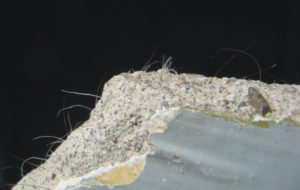
Asbestos is a hazardous material and a type of mineral fiber which is commonly used in various construction materials including plaster. Asbestos plaster is commonly a in the construction of homes, office buildings, schools, warehouses, universities, churches, and other buildings. As a matter of fact, despite the health issues that this mineral fiber causes, asbestos is still legal in Canada and the United States. Though most products were produced between 1940 and 1990. Thus, this mineral fiber content can be easily found in many commercial as well as residential buildings built in this time frame.
As a matter of fact, despite the health issues that this mineral fiber causes, asbestos is still legal in Canada and the United States. Though most products were produced between 1940 and 1990. Thus, this mineral fiber content can be easily found in many commercial as well as residential buildings built in this time frame.
Identifying Asbestos in Plaster
There are basically three types of asbestos plaster – lime plaster, gypsum (also known as plaster of Paris), and cement plaster. It is important for you to know that asbestos is well known for its heat-resistive properties, and therefore, it is combined with plaster compounds in order to produce heat and fire-resistant ceilings and walls.
Many older cement brands include asbestos fibers in their plaster mix, and therefore, it is imperative that you perform a proper inspection in order to detect the presence of harmful mineral fibers in plaster.
Testing Plaster for Asbestos
Warning – Please DO NOT attempt unless you are an experienced technician.
Before examining any plaster mixture for asbestos content, make sure to wear approved protective gears like gloves, a, and goggles. The following steps could help you to determine the presence of asbestos fibers in plasters:
- Mark the sampled area, and wet its surface using soapy water.
- Cut a small plaster square out of the ceiling or wall. Make sure that you cut the sample plaster square through its entire depth.
- Place the sample plaster square in a thick and airtight plastic bag.
- Label the plaster sample with its appropriate location and date.
- Send the plaster sample to a recognized asbestos-testing lab along with all essential information. The cost of samples are layering dependent, meaning the more layers to the sample, the cost will go up.
You can easily receive the test results in a few days. In case your plaster mixture contains asbestos, you can consult companies for asbestos removal in San Diego for proper disposal of the mixture of asbestos plaster. CVE Corp is a qualified asbestos removal company and you can contact us at 855-912-6787 or visit our website http://cvecorp.com for more help.