The Asbestos Abatement Professional: Why California Trusts CVE Corp

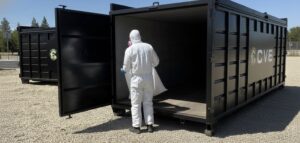
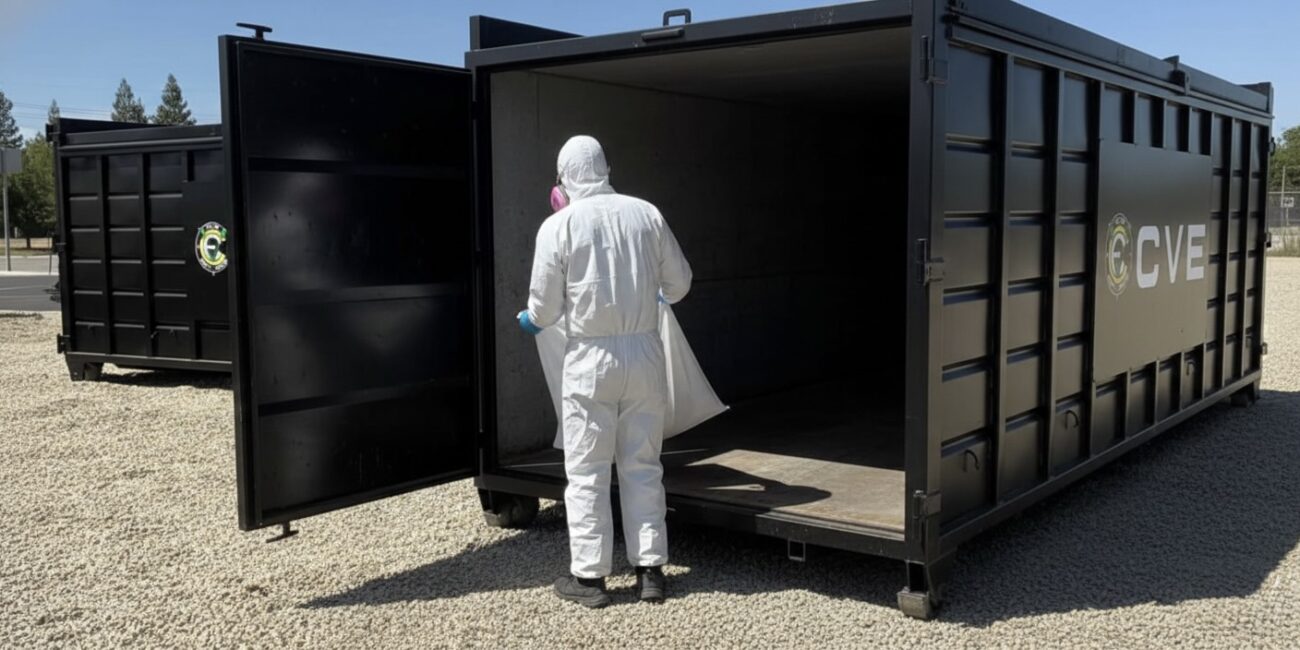
cve worker trowing out asbestos in a cve branded dumpster

TL;DR (Too Long; Didn’t Read)

  • The Risk: Asbestos is a hidden, carcinogenic hazard in millions of California structures built before 1980. Disturbance during renovation or disaster recovery (wildfires/floods) releases deadly fibers.
  • The Law: California regulations (Cal/OSHA Title 8, EPA NESHAP) are strict. As of 2025, new rules regarding electronic waste manifesting make hiring a licensed professional legally critical to avoid liability.
  • The Solution: CVE Corp (Central Valley Environmental) is more than a contractor; we are an asbestos abatement professional. With 30+ years of experience and offices in Fresno, Rohnert Park, and San Diego, we offer statewide coverage.
  • The Difference: We provide “turnkey” service—handling everything from the initial Negative Exposure Assessment to the final structural demolition and site grading.
  • The Verdict: Don’t risk DIY or “handyman” removal. Trust CVE’s CSLB-licensed (Lic# 974852) and DOSH-registered experts to protect your health and property value.

The High Stakes of Hazardous Materials

In the diverse architectural landscape of California—from the Victorian homes of San Francisco to the mid-century stucco of San Diego and the industrial hubs of the Central Valley—a silent adversary remains embedded in our infrastructure. Asbestos, once hailed as a “miracle mineral” for its fire resistance, is now known as a potent carcinogen.

When you decide to renovate a kitchen, demolish an old barn, or clean up after a fire, you aren’t just dealing with debris; you are potentially disturbing a hazardous material. This is where the distinction between a general contractor and an asbestos abatement professional becomes a matter of life, death, and significant legal liability.

At CVE Corp, we define “professionalism” not just by our ability to remove material, but by our ability to engineer safety. As we navigate 2026, the regulatory environment in California has shifted. With stricter exposure limits and new digital tracking for hazardous waste, the “guy with a truck” is no longer just a risky choice—he is a liability. This guide explains why CVE Corp is the partner you need to navigate these complexities safely.

What is an Asbestos Abatement Professional?

An asbestos abatement professional is a highly trained, state-licensed entity authorized to handle, remove, and dispose of asbestos-containing materials (ACMs). In California, this is not a self-appointed title; it is a legal status defined by rigorous certification.

To legally perform abatement work involving more than 100 square feet of material, a professional must possess:

  1. CSLB C-22 License: A specific classification for Asbestos Abatement issued by the Contractors State License Board.
  2. DOSH Registration: Registration with the Cal/OSHA Asbestos Contractors’ Registration Unit (ACRU).
  3. Certified Workforce: Supervisors and technicians must hold current AHERA (Asbestos Hazard Emergency Response Act) certifications, renewed annually.

CVE Corp holds these credentials (CSLB #974852 / #913083, DOSH #1064 / #938). When you hire CVE, you are hiring a team that has undergone thousands of hours of training to understand the physics of fiber release and the biology of lung protection.

Why “General” Contractors Aren’t Enough

A general contractor is great for building, but they often lack the insurance and training for environmental remediation. If a general contractor disturbs asbestos without a containment plan, they contaminate the entire property. As the property owner, you could be held liable for the cleanup costs and the health impacts on workers—a risk that vanishes when you hire a dedicated abatement professional like CVE.

The CVE Advantage: Statewide Reach, Local Expertise

One of the unique challenges in California is its geography. A disaster or a project timeline shouldn’t wait for a contractor to travel 400 miles. CVE Corp has strategically positioned three major hubs to service over 90% of the state with rapid response times.

1. Fresno (Central Valley)

  • Focus: Industrial, Agricultural, and Residential.
  • The Need: The Central Valley is the heart of California’s agriculture and industry. Older packing houses, processing plants, and farm structures often contain transite pipe (asbestos cement) and thermal system insulation on boilers.
  • CVE Capability: Our Fresno team is equipped with heavy demolition machinery, allowing us to abate an industrial site and immediately demolish the structure, offering a seamless workflow for commercial developers.

2. Rohnert Park (North California)

  • Focus: Wildfire Recovery, Vineyards, and Historic Residential.
  • The Need: The North Bay faces a specific threat: Wildfire Debris. When a structure burns, asbestos doesn’t disappear; it concentrates in the ash. This “thermally degraded” asbestos is highly friable (easily crumbled) and dangerous.
  • CVE Capability: We are specialists in disaster response. Our Rohnert Park teams are trained in the specific FEMA and CalRecycle protocols required to safely clear fire-damaged lots, protecting the soil and the surrounding wine country ecosystem.

3. San Diego (Southern California)

  • Focus: Military, Government, and Stucco Architecture.
  • The Need: San Diego’s “Spanish Colonial” style relies heavily on stucco. Historically, asbestos was added to exterior stucco for reinforcement. Removing it requires wrapping the entire building in containment. Additionally, the region’s strong military presence requires contractors who can meet strict government security and compliance standards.

CVE Capability: Our San Diego team has deep experience navigating the strict air quality rules of the San Diego APCD (Air Pollution Control District). We have handled complex projects for government buildings and large-scale residential developments

The Technical Standard: How We Protect Your Home

When you search for an “asbestos abatement professional,” you are really searching for peace of mind. That peace of mind comes from our engineering controls. Here is the technical process CVE Corp employs to ensure zero exposure.

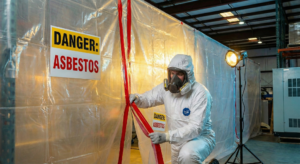
Phase 1: The Negative Pressure Enclosure (NPE)

We don’t just hang plastic; we build a pressurized environment.

  • Critical Barriers: We seal all HVAC vents, windows, and doors with tape and poly sheeting.
  • Negative Air Machines: We install machines equipped with HEPA (High-Efficiency Particulate Air) filters that scrub 99.97% of particles. These machines pull air out of the work area, creating a vacuum (negative pressure).
  • The Physics: Because the pressure inside is lower than outside, if a tear occurs in the plastic, clean air rushes in—contaminated air never rushes out.

Phase 2: The 3-Stage Decontamination Unit

To prevent “take-home” exposure (where workers carry fibers home to their families), CVE sets up a three-room hygiene system:

  1. Dirty Room: Workers leave their tools and remove their outer protective suits here.
  2. Shower Room: Workers must shower while wearing their respirators to wash fibers off the equipment before removing it.
  3. Clean Room: Workers dry off and dress in street clothes, leaving the hazard completely behind.

Phase 3: Regulated Waste Management (The 2026 Update)

As of late 2025, the EPA and California DTSC have fully transitioned to Electronic Manifesting (e-Manifest).

  • The Old Way: Paper trails that could be lost or forged, leaving homeowners liable if waste was dumped illegally.

The CVE Way: We utilize the new digital e-Manifest system. This tracks every bag of asbestos waste from your driveway to the landfill in real-time. You get digital proof that your hazardous waste was disposed of legally, closing the loop on your liability.

Answer Engine Optimization: Common Questions (FAQ)

To help you find quick answers, here is a breakdown of the most common queries we receive

Can I remove asbestos myself?

Legally: Yes, for single-family homes (though restrictions apply). Practically: No. Without negative pressure, you will contaminate your HVAC system, furniture, and lungs. The cleanup cost often exceeds the initial professional removal cost.

How much does professional abatement cost?

Costs vary by sq. ft. and difficulty. Popcorn ceiling removal generally runs $5-$10/sq. ft., while floor tile is $4-$8/sq. ft. However, CVE offers transparent estimates that factor in containment and disposal fees upfront.

Do you do testing?

CVE focuses on abatement and demolition. By law (to prevent conflict of interest), testing should be done by an independent Certified Asbestos Consultant (CAC). We work with trusted third-party CACs and can refer you to the best in your area.

What is "Turnkey" Demolition?

It means we handle the whole project. Instead of hiring an abatement company and a demolition company, CVE does both. We abate the hazardous materials, certify the site safe, and then demolish the structure, handling all permits and soil grading.

The Medical Reality: Why Compliance is Non-Negotiable

The term “asbestos abatement professional” isn’t just business jargon; it’s a medical necessity. The fibers we manage—Amphibole (needle-like) and Chrysotile (curly)—are microscopic killers.

  • Mesothelioma: A cancer of the lung lining caused almost exclusively by asbestos. California sees some of the highest case numbers in the U.S. due to our construction history.
  • Latency: The damage done today doesn’t show up for 20 to 50 years. Hiring CVE protects your family’s future health, not just your current renovation project.
  • Friability: This refers to how easily material crumbles. “Popcorn” ceilings and wildfire ash are highly friable, meaning a simple draft can release millions of fibers. Professional wetting agents and containment are the only way to control this.

Case Study: Disaster Response in the North Bay

Following recent wildfire seasons, CVE Corp was mobilized to assist in the cleanup of residential zones in Sonoma County.

  • The Challenge: Entire neighborhoods were reduced to ash footprints containing pulverized asbestos from piping, siding, and flooring.
  • The CVE Solution: We deployed crews with heavy equipment and specialized “bulk wetting” protocols to prevent ash from becoming airborne.
  • The Result: Sites were cleared rapidly, soil tests came back clean, and families were able to begin the rebuilding process months sooner than expected. This is the efficiency of a large-scale asbestos abatement professional.

Choosing CVE Corp: The Checklist

When evaluating a contractor, ensure they check these boxes. CVE Corp checks them all.

  • [x] State Licensed: CSLB C-22 License.
  • [x] DOSH Registered: Verified with Cal/OSHA.
  • [x] Insured: Specific pollution liability insurance (general liability is not enough).
  • [x] Local Presence: Physical offices in Fresno, Rohnert Park, and San Diego.
  • [x] Turnkey Service: Ability to handle abatement, mold remediation, and demolition.
  • [x] Digital Compliance: Ready for 2025/2026 e-Manifesting regulations.

Conclusion: Safety is a Choice

The decision to hire an asbestos abatement professional is the single most important step in any renovation or demolition project. It is the barrier between a successful upgrade and a health hazard.

CVE Corp has spent over three decades refining the art and science of environmental safety. Whether you are a homeowner in San Diego dealing with stucco, a vineyard owner in the North Bay recovering from fire, or a facility manager in Fresno upgrading a plant, our team is ready.

We don’t just remove asbestos; we remove the worry.

Ready to start your project safely?

Call CVE Corp today at 855-912-6787 or visit our Contact Page to schedule your assessment with California’s leading asbestos abatement professional.

Disclaimer: This blog post is for informational purposes. Asbestos regulations are subject to change. Always consult with a certified professional for specific project advice.

Related News